1752119111@qq.com
+86 1365 2921 391
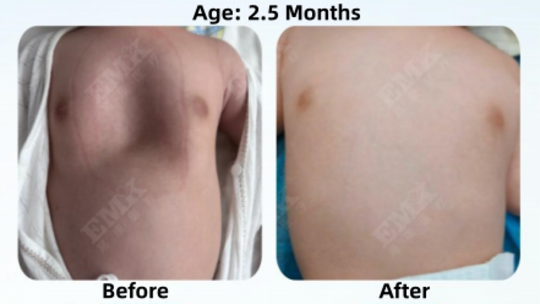
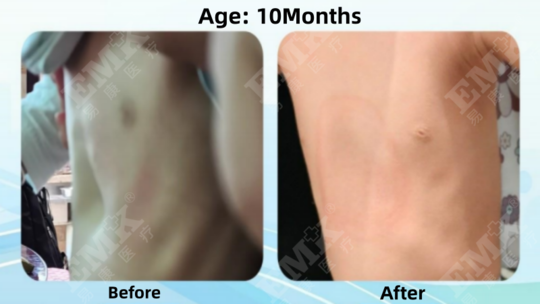
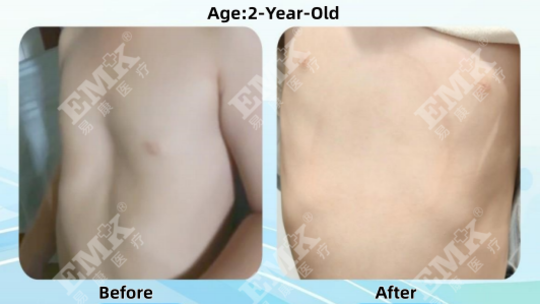
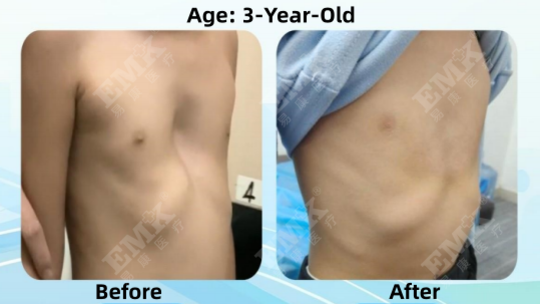
Pectus Excavatum is the most common congenital chest wall deformity and is characterized by a sunken sternum.
Some children show visible chest depression during infancy, while others become more noticeable as they grow.
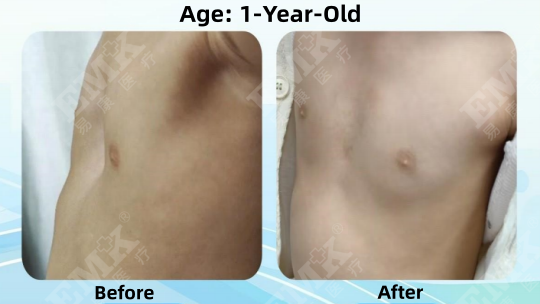
This case presents the chest wall appearance of a 1-year-old child before treatment and after 1 year and 7 months of Vacuum Bell management.
1 year old
May 2024
Visible sternal depression
Uneven anterior chest wall contour
Funnel-shaped chest appearance
Chest deformity noticed during infancy
Vacuum Bell Therapy
Non-surgical chest wall management
Improve chest wall appearance
Reduce visible depression
Monitor chest wall development
Support long-term chest wall management
A noticeable depression of the sternum was visible, creating a characteristic funnel-shaped appearance of the chest.
Compared with the initial presentation:
Reduced sternal depression
Improved chest contour
More natural chest appearance
Better chest wall symmetry
May 2024
Pronounced chest depression
Sunken central chest wall
Uneven chest contour
Improvement in depressed area
Flatter chest wall contour
More balanced chest appearance
Based on visual comparison:
Improved compared with baseline.
Smoother anterior chest wall appearance.
More balanced chest wall structure.
Closer to a natural chest wall shape.
During infancy and early childhood, the chest wall remains highly flexible and continues to develop.
Early evaluation may help:
Monitor chest wall growth
Track progression of deformity
Develop appropriate management plans
Support long-term follow-up
Yes. Some cases become visible during infancy or early childhood.
Chest appearance may change during development, but progression can also occur. Regular monitoring is recommended.
Suitability depends on age, chest wall flexibility, severity, and professional evaluation.
No. Treatment recommendations should be based on individual assessment.
This case illustrates how chest wall appearance can be monitored during growth and development.
Because every patient has unique anatomy and growth patterns, individualized evaluation and long-term follow-up remain essential.
This case is provided for educational purposes only.
Individual results vary depending on age, chest wall flexibility, severity, growth patterns, and treatment adherence.
The outcome shown in this case does not guarantee similar results for other patients.
EMK Yikang Medical provides:
✓ Professional Chest Wall Evaluation
✓ CT Imaging Analysis
✓ 3D Chest Wall Reconstruction
✓ Customized Vacuum Bell Design
✓ Long-Term Follow-Up Support
Contact our team today for a personalized assessment.
Contact: KAM
Phone: +86 1365 2921 391
Tel: +86 1365 2921 391
Email: 1752119111@qq.com
Add: Orthosis Customization Center, 6th Floor, Rehabilitation Building, Guangdong Maternal and Child Health Hospital
We chat