1752119111@qq.com
+86 1365 2921 391
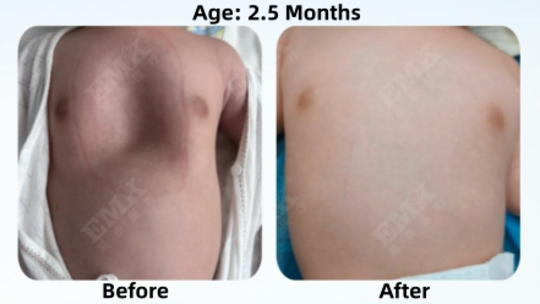
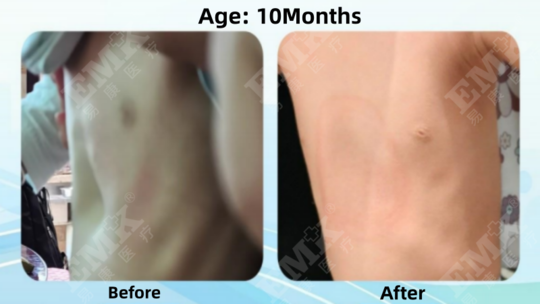
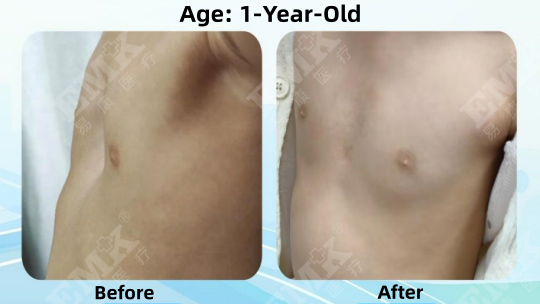
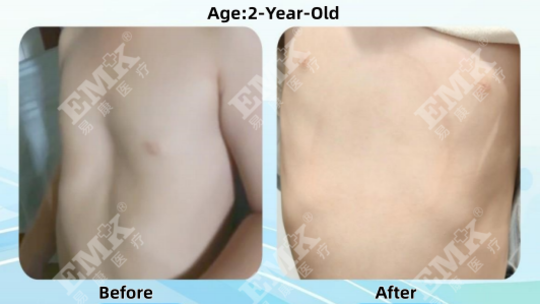
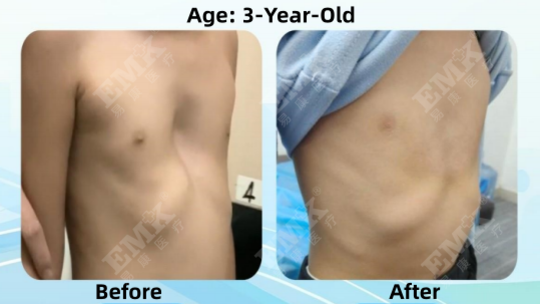
Pectus Excavatum is a congenital chest wall deformity characterized by a sunken or depressed sternum.
In some infants, the condition can be observed shortly after birth, while in others it becomes more noticeable during growth.
This case documents the chest wall evaluation and follow-up process of a 2.5-month-old infant managed with Vacuum Bell therapy.
The purpose is to provide clinical insight into early-stage chest wall assessment and conservative management.
2.5 months
boy
August 2025
Visible central chest depression
Parents noticed chest shape abnormality after birth
Normal feeding and daily activity
No significant respiratory distress
Observation:
A visible depression of the sternum area consistent with early-stage Pectus Excavatum.
Due to the patient’s very young age, the chest wall was highly flexible and still in early developmental stages.
After clinical evaluation, a conservative non-surgical management approach was selected.
Key considerations included:
Very early detection
High chest wall flexibility
Visible cosmetic deformity
Family preference for non-surgical treatment
Vacuum Bell Therapy
August 2025
3 months
Monthly clinical review
Monitor chest wall development
Track sternum position changes
Observe structural improvement over time
Establish long-term chest wall management strategy
August 2025
November 2025
Reduced compared to baseline presentation.
More natural anterior chest shape observed.
Improved balance of the chest wall appearance.
Infant chest walls are highly flexible and undergo rapid developmental changes.
Early evaluation may help:
Monitor chest wall growth patterns
Identify progression of deformity
Guide long-term management planning
Assess potential need for intervention
Yes. Pectus Excavatum can be present at birth or become visible during early infancy.
Some mild cases may change with growth, but others may become more pronounced during adolescence.
Regular monitoring is recommended.
Suitability depends on individual evaluation, chest wall structure, and professional medical assessment.
No. Treatment decisions depend on severity, clinical findings, and specialist evaluation.
This case demonstrates that early-stage chest wall deformities can be monitored and managed through structured follow-up.
Due to variability in chest wall development, individualized treatment planning is essential.
Early assessment and long-term monitoring remain key components of pediatric chest wall management.
This case is provided for educational and informational purposes only.
Individual outcomes may vary depending on:
Age
Chest wall flexibility
Severity of deformity
Growth pattern
Treatment adherence
This case does not guarantee identical results in other patients.
If you notice signs such as:
Sunken chest appearance
Chest asymmetry
Suspected Pectus Excavatum in infants
Early professional evaluation is recommended.
EMK Yikang Medical provides:
Professional chest wall assessment
CT-based evaluation when needed
3D chest wall reconstruction
Customized Vacuum Bell solutions
Long-term follow-up support
Contact our clinical team for a personalized evaluation.
Contact: KAM
Phone: +86 1365 2921 391
Tel: +86 1365 2921 391
Email: 1752119111@qq.com
Add: Orthosis Customization Center, 6th Floor, Rehabilitation Building, Guangdong Maternal and Child Health Hospital
We chat