1752119111@qq.com
+86 1365 2921 391
The cases presented on this page are based on long-term chest wall management and follow-up data from EMK Medical.
All cases are derived from the following sources:
Clinical assessment records
Routine chest imaging documentation
Vacuum Bell usage tracking records
Follow-up feedback from patients and parents
Long-term observational follow-up (3–24 months)
To ensure accuracy and consistency, all cases follow standardized evaluation protocols, including imaging angles, lighting conditions, and posture requirements.
The effectiveness of Pectus Excavatum Treatment is closely related to patient age. Therefore, cases are categorized into three groups:
Children (0–12 years)
Adolescents (12–18 years)
Adults (18+ years)
In general:
Younger age → more flexible chest wall → higher potential for improvement
Older age → more rigid chest wall → slower rate of change
The cases on this page include two main conservative management approaches:
Vacuum Bell is a non-surgical chest wall correction method that uses negative pressure to gently lift the sternum outward.
Key characteristics include:
Non-invasive treatment
Home-based usage
Long-term consistent application
Requires continuous follow-up
Some patients also receive additional supportive therapies, including:
Posture correction training
Breathing exercises
Body alignment improvement
Core muscle strengthening
Vacuum Bell usage
Combined treatment is typically applied in moderate cases or growing patients to improve overall chest wall stability.
To ensure objective evaluation, all cases follow standardized assessment protocols:
Front view
Side view
Oblique (45-degree) view
All images are taken under consistent lighting, posture, and positioning conditions.
In selected cases, evaluations may include:
Sternum depression depth measurement
Chest symmetry assessment
Rib flare observation
Follow-up periods typically include:
Initial consultation (0 months)
3 months
6 months
12 months or longer
Some cases are followed for more than 2 years.
During childhood, the chest wall is still developing and generally has higher structural flexibility.
Age: 2 years
Severity: Mild
Treatment: Vacuum Bell + regular follow-up
Duration: 8 months
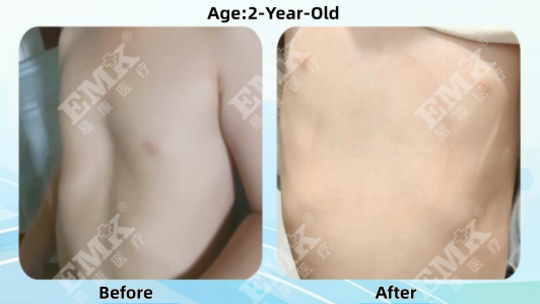
Observed Results:
Significant improvement in sternal depression
More balanced chest contour
Parent feedback: improved child confidence
Age: 10 years
Severity: Moderate
Treatment: Vacuum Bell + posture training
Duration: 12 months
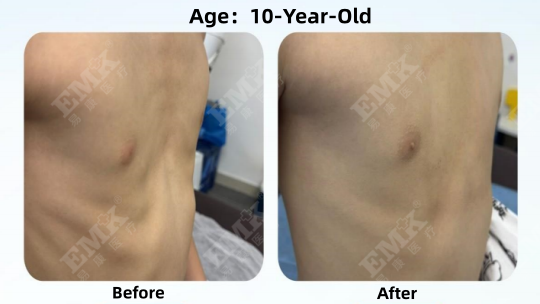
Observed Results:
Improved chest symmetry
Reduced rounded shoulder posture
Enhanced physical activity performance
Adolescents represent the most common treatment group and often show the most noticeable improvement potential.
Age: 14 years
Severity: Moderate
Treatment: Vacuum Bell + combined training
Duration: 10 months
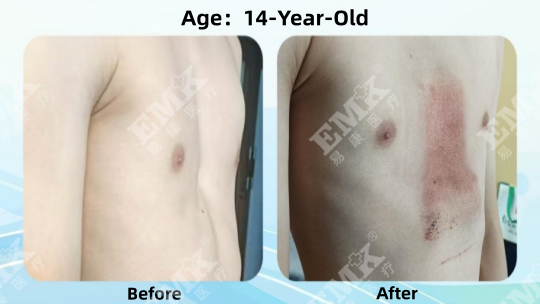
Observed Results:
Reduced chest depression
Improved posture (reduced rounded shoulders)
Significant increase in self-confidence
Age: 16 years
Severity: Moderate to severe
Treatment: Long-term Vacuum Bell therapy
Duration: 18 months
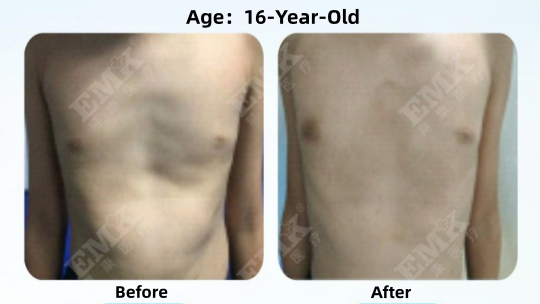
Observed Results:
Improved chest wall contour
Increased exercise tolerance
Reduced appearance-related anxiety
In adults, the chest wall is fully developed; therefore, improvements are typically slower, but visible changes may still occur.
Age: 23 years
Severity: Mild to moderate
Treatment: Vacuum Bell + posture management
Duration: 24 months
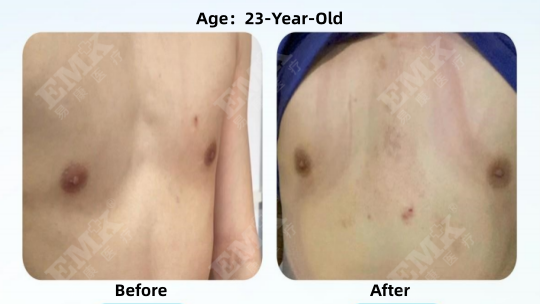
Observed Results:
Improved chest contour lines
More balanced chest appearance
Increased self-confidence
Individual outcomes vary significantly depending on:
Age
Chest wall flexibility
Usage frequency
Depth of deformity
Patient compliance
These cases are for reference only and do not guarantee identical outcomes for all patients.
If you would like to understand:
Whether you or your child is suitable for Vacuum Bell therapy
Expected level of improvement
Whether treatment is necessary
A professional chest wall evaluation is recommended.
EMK Medical provides:
Personalized chest wall assessment
Non-surgical treatment recommendations
Custom Vacuum Bell solutions
Long-term follow-up support
Contact our medical team for consultation today
Contact: KAM
Phone: +86 1365 2921 391
Tel: +86 1365 2921 391
Email: 1752119111@qq.com
Add: Orthosis Customization Center, 6th Floor, Rehabilitation Building, Guangdong Maternal and Child Health Hospital
We chat